Target Expands K-Beauty Assortment in Mass Retail Shift Through New Beauty Studio Launch

The retail landscape across the United States is undergoing a noticeable transformation as major big-box chains actively revamp their merchandising strategies to capture evolving consumer preferences. Among the most prominent shifts is the rapid expansion of Korean beauty—commonly known as K-beauty—brands within mainstream retail environments. Walking down the beauty aisle of a Target store today, shoppers encounter a significantly larger and more diverse selection of K-beauty skincare, cosmetics, and hair-care items than they would have just a year ago. This expansion reflects both a deliberate corporate strategy by Target to modernize its beauty offerings and an aggressive push by Korean brands to capture the lucrative U.S. mass-market consumer base.
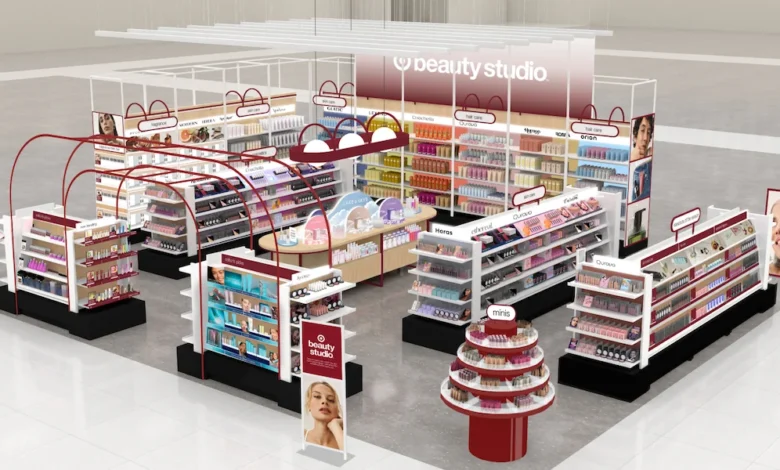
The evolution of K-beauty in the United States has transitioned from a niche, trend-driven phenomenon into a dominant force shaping the global beauty industry. By integrating over 150 new products and more than 10 new brands earlier this year, Target quadrupled its K-beauty assortment. This momentum culminated in the recent launch of the Target Beauty Studio, a newly minted retail section replacing the former Ulta Beauty shops within select Target stores. The newly curated space introduces more than 1,600 products from 90 distinct brands—the vast majority of which are new to the retailer—with a heavy emphasis on Korean-owned and -founded enterprises.
Chronology and Evolution of K-Beauty in U.S. Retail
To understand the current scale of K-beauty’s presence in mass retail, it is essential to examine its chronological trajectory within the American market. Historically, Korean cosmetics and skincare brands entered the U.S. market primarily through specialty beauty retailers, e-commerce platforms, and independent boutiques. Stores like Sephora and Ulta Beauty served as foundational havens for consumers seeking innovative formulations, such as sheet masks, multi-step essences, and snail mucin treatments.
Over the past two years, however, the strategy of these brands has shifted dramatically toward mass-market and big-box distribution. Specialty retailers laid the groundwork by cultivating an educated consumer base. Last year, Ulta Beauty added 13 new K-beauty brands across its makeup and skincare categories. Concurrently, Sephora partnered with South Korean beauty retailer Olive Young this year to introduce 19 K-beauty brands into its U.S. stores and online platforms, a move mirrored by Olive Young’s independent efforts to establish physical retail outposts in the United States.
Target’s recent strategic maneuvers represent the next phase of this evolution: bringing K-beauty out of specialty boutiques and into the daily shopping paths of everyday consumers. By introducing brands like Amuse, Kaja, Rom&nd, Dr. Melaxin, Purito Seoul, and Sungboon Editor—alongside dozen-plus other Korean-owned or founded lines such as Aromatica and Voesh—Target is positioning itself as a primary destination for both seasoned K-beauty enthusiasts and curious newcomers.
Industry Perspectives and Brand Strategies
The decision by major Korean beauty brands to partner with mass-market giants like Target is driven by a desire for widespread accessibility and brand credibility. Industry leaders point out that the perception of K-beauty has fundamentally matured.
“The fact that so many K-beauty brands are entering major retail channels proves that Korean cosmetics are actively leading the global beauty market,” said Jinwoo (James) Kim, a regional leader for the Korean-owned skincare brand Dr. Melaxin. “Unlike in the past when it was a temporary trend, it’s now clear that everyone is genuinely interested, which has significantly raised consumer expectations and standards.”
Dr. Melaxin specifically tailored its product offerings to address the diverse skin concerns of Target’s broad customer demographic, focusing on solutions for fine lines, uneven skin texture, and brightening. Additionally, the brand rolled out a miniaturized version of its Peel Shot black rice exfoliating ampoule as a Target exclusive. While Dr. Melaxin maintains a presence in specialized channels such as Ulta, Costco, Nordstrom, and Amazon, Kim noted that entering Target was a deliberate strategic move to maximize daily consumer touchpoints.
Similarly, Voesh, a Korean-owned brand specializing in body care, leveraged its deep industry expertise to design a specialized line tailored specifically for the Target shopper. Vera Oh, co-founder and CEO of Voesh, explained that the brand’s new collection—comprising a serum body scrub wash, serum body cream, deodorant balm, and shimmer body oil—was built around a simplified K-beauty body care ritual: cleanse, treat, moisturize, and finish.
“A lot of it comes from what we’ve learned over a decade working with spas on our professional side, what people actually respond to in texture and fragrance,” Oh stated. “We wanted Target customers to walk away with a new K-beauty body care ritual, not just a new product.”
Other established brands, such as the makeup line Kaja, view the partnership as a natural extension of their market reach. Initially launched in 2018 through a collaboration with Sephora and Memebox, Kaja curated a specialized selection of 40 stock-keeping units (SKUs) for Target, spanning eye shadows, eyeliners, blushes, and lip glosses. Dino Ha, founder and CEO of Seoul-based Memebox, emphasized that the collaboration allows the brand to introduce its playful design and innovative formats to a broader audience through a trusted retail partner.
Supply Chain Realities and Operational Challenges
While the expansion into big-box retail presents lucrative growth opportunities, industry experts caution that scaling operations for the U.S. mass market requires rigorous logistical preparation. Securing placement in thousands of brick-and-mortar locations demands robust infrastructure, strict inventory management, and precise pricing controls.
Daniella Jung, founder and CEO of Muskat Beauty—the U.S. distributor for brands like Purito Seoul and Aromatica, both of which secured placement in Target’s Beauty Studio due to a lack of geographic exclusivity constraints—noted that many international founders initially underestimate the operational complexities of American retail.
“They have to be ready to expand within the major U.S. retailers, which requires inventory control ability and price control, and they need to have the right marketing strategy for the U.S. market,” Jung cautioned. Following initial awareness-building efforts, such as pop-up events in Los Angeles and direct engagement with Target merchants, Jung predicts that a wave of international beauty brands will seek similar distribution deals across CVS, Walmart, and national grocery chains within the next two years.
Broader Implications for the Retail Ecosystem
Target’s continuous refreshment of its beauty department is part of a broader corporate initiative to modernize its product assortment and improve the in-store shopping experience, ultimately driving long-term financial growth. By shifting away from previous retail partnerships and establishing the independent Target Beauty Studio, the corporation retains greater control over its merchandising mix.
However, the composition of the new 90-brand assortment has also drawn scrutiny regarding retail diversity. Industry analysis by Modern Retail highlighted a significant lack of Black-owned brands within the newly curated Beauty Studio lineup, identifying only two such enterprises: hair-care brand Briogeo and cosmetics line Glamazon Beauty. This imbalance underscores ongoing challenges within major retail sectors regarding equitable brand representation alongside surging international imports.
Despite these gaps, Target maintains that the Beauty Studio assortment is dynamic and will continue to evolve. Company representatives emphasized that product curation will be driven by ongoing consumer data, emerging trends, and continuous feedback from shoppers who favor the accessibility, playful packaging, and proven efficacy of Korean formulations.
Ultimately, the mass-market integration of K-beauty signals a permanent shift in consumer behavior. Industry veterans agree that American shoppers are no longer viewing Korean skincare and cosmetics through the lens of a passing novelty. Instead, K-beauty has successfully integrated into the fabric of everyday routines, prioritizing high-performance ingredients, innovative application formats, and accessible pricing models that resonate across diverse demographic segments. As supply chains adapt and more international brands secure major retail partnerships, the boundaries between specialty boutiques and mass-market retail will continue to blur, cementing K-beauty as a cornerstone of the modern American beauty economy.